The Root Causes of Chronic Illness: Functional Medicine with Dr. Aaron Hartman of Richmond Integrative Medicine

 Apple Podcasts
 Spotify
 Castro
 RSS Feed
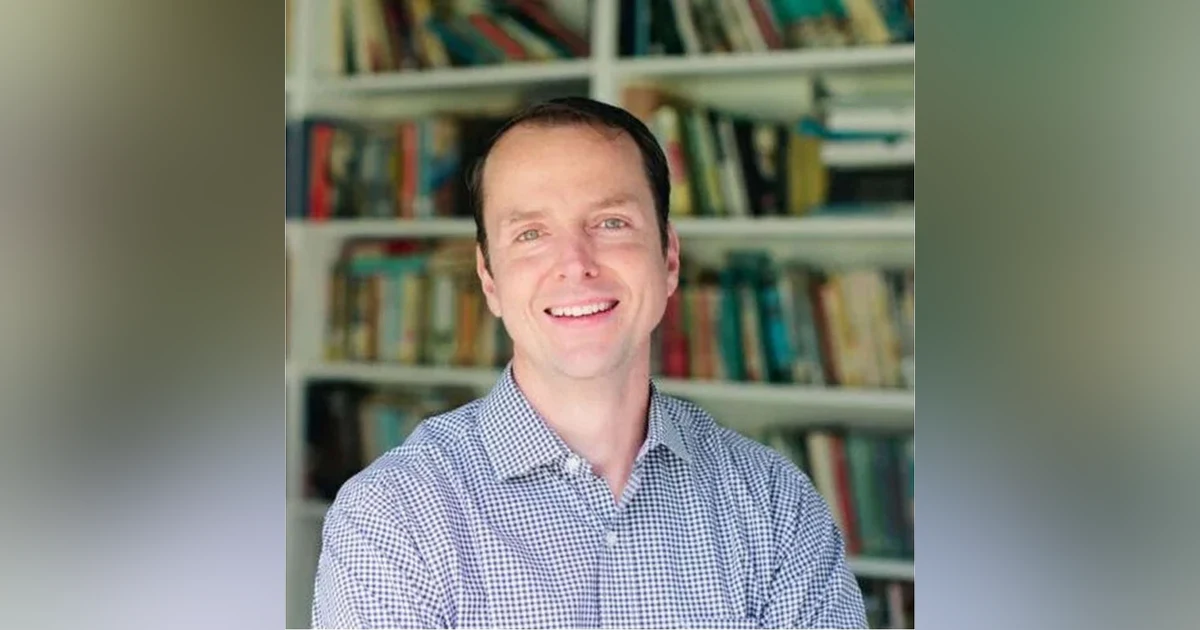
 In this episode of Healthy Team, Healthy Business, we sit down with Dr. Aaron Hartman of Richmond Integrative & Functional Medicine to explore the REAL root causes behind chronic illnesses — from mold exposure and processed foods to stress, sleep, and environmental toxins.
Dr. Hartman shares why so many patients fall between medical specialties, collect “normal labs,” and still don’t feel well. His systems-based approach connects the dots between the gut, brain, heart, immune system, environment, toxins, diet, and lifestyle — revealing patterns traditional medicine misses.
We discuss powerful stories from his practice, including a business owner who suffered five strokes before discovering the trigger was mold in his home, and how Dr. Hartman helps people recover from chronic Lyme, autoimmune disease, long-COVID, chronic fatigue, and mystery illnesses.
You’ll also hear why:
- 80% of heart disease and 70% of cancers can be prevented with lifestyle
- Processed food and industrial fats are driving metabolic disease
- Stress and sleep are two of the biggest “health levers” for entrepreneurs
- Our healthcare system can’t reverse chronic disease using 15-minute visits
- A functional medicine intake takes hours — and why it needs to
- Wearables, HRV, circadian rhythm, and light exposure matter more than ever
- The future of chronic care will be education-driven, patient-led, and root-cause focused
Whether you’re a leader responsible for a team, someone navigating chronic symptoms, or simply trying to improve your long-term health, this conversation is packed with insight you won’t hear in traditional medical settings.
Check out this amazing story here: Uncurable
His own podcast is here: Made For Health
On Instagram: Instagram
Facebook: Facebook
INSTAGRAM
FACEBOOK
OUR WEBSITE
EMAIL: teamdudes@healthyteamhealthybusiness.net
On today's show, we were joined by Doctor Aaron Hartman, Richmond Integrated Greater Than Functional Medicine, um, here in Richmond, Virginia. And he started his practice several years ago, um, after a journey [...0.7s] he went on [...0.6s] trying to help his own adopted daughter find her way to health and the traditional systems just weren't working. And he's developed it over the years into quite a practice where he's [...0.5s] resolving all kinds of problems for folks.Is his approach is very [...0.7s] interesting and seems like the same kind of path we've worked with mother practitioners who have found their way kind of out of the traditional western medicine model [...0.5s] where they're spending more time with patients, they're doing more detailed [...0.8s] blood panels and questionnaires and things like that.So we really got a lot of in depth information about his practice and how he [...0.5s] kind of approaches medicine and helping people.So [...0.5s] I really think this is one that we remember for a while as something that had, you know, have an impact for, [...0.6s] for our listeners, [...0.7s] yeah, definitely enjoyed our conversation today, especially [...0.4s] kind of diving into Lyme disease is something that's gonna [...1.1s] hot topic here in Virginia or something that's causing a lot of [...0.9s] pain for some family.So enjoy diving into that and just listening to different ways that he deals with that or trying to measure metrics on his own body with things like the war ring. So enjoyed our conversation. Thank you.Welcome, [...0.5s] thanks for joining us today on another episode of the Healthy Team, Healthy Business podcast. Today we're joined by Doctor Aaron Hartman, uh, from his practice in Richmond, Virginia.And we're very excited to have him on. Um, he kind of, he speaks our language. We believe in we're gonna be [...0.4s] having a great conversation, learning a lot about [...0.4s] his practice there in Richmond. So Doctor Harpman, thank you for joining us today, appreciate it.Well, thanks for inviting me. Yeah. We're excited to have this conversation. Um, when we get connected with practitioners like you who are [...0.4s] finding different ways to provide health, um you know, to the, to the population [...0.6s] and, um, maybe, maybe work your way a little bit outside of the, you know, traditional [...0.4s] system and finding ways to really make an impact on people's health.One of you could just spend a minute talking about your practice and maybe how you got [...0.6s] inspired to, to kind of start your own practice [...0.6s] and what it entails. My practice of a medicine has been evolving over 25 years. Mean, as you learn new things, you do new things.And so currently it's engraving functional medicine practice here in Richmond. So what that means is I look outside the box. When people have multiple symptoms, multiple complaints, [...0.7s] I've been the multiple specialists, um, and been told, nothing's wrong with you, it's all in your head or you can't be helped. I basically connect the dots and figure out what's going on.So what does that mean? That's a lot of chronic fatigue fibro post concussive syndrome. We were taking care of long covid before people even knew what it was.Chronic lab disease here in Richmond's a big thing. Even though the infectious disease doctor still don't think it's a thing. It's been here for a long time.So those are kind of um, [...0.4s] people we take care of. But my career has been a, you know, a weird kind of path. I started out in the military [...0.4s] doing traditional medicine, worked in the hospital system, [...0.5s] private practice to created a clinical research company.I'm currently actually, right as of now, the assistant clinic professor of medicine at the Medical College of Virginia.So I've had a [...0.7s] very academic career, but it's parallel, [...0.6s] been parallel to this out of the box thinking that's was driven primarily by my daughter that my wife and I adopted [...0.8s] about 18 years ago. And the healthcare system didn't have any options for her. And we were forced to think outside the box.Which if you have a lot of entrepreneurs, this is a group of people who like, that's all they do, right? So the kind of you know, doing things anyone else does and stop just basically done that medicine for, [...0.8s] you know, going on, I mean [...0.8s] 20 years now.Yeah, [...0.7s] what does that look like somebody coming to you versus maybe the traditional sense [...0.4s] where it's traditional medicine. So if you come to a few new patients sees me, um, there's a, you have to fill out about 20 pages of paperwork that usually takes you two to three hours basically.And then, um, I review that and then we sit down, we have about a two and a half hour, two hour conversation. I review your history, [...0.5s] do a very in depth physical exam on you, order a lot of testing and usually it takes me an hour to review all the labs.So you're looking at, [...0.5s] I'm investing Pi four hours, [...0.8s] four to five hours of time [...0.4s] into that visit that you're investing two hours of time into [...0.8s] state or physical exam is like 20 or 30 minutes.So ultimately, it's a lot of time that allows me to apply everything I've Learned over 25 years. You know um, so [...1.0s] how do I think differently?You know, instead of thinking like, this is your heart, you see a cardiologist, um, this is your lungs, you see a pulmonologist, [...0.5s] this is your gut, you see a gastrologist.Thing of realizing there's actually a space between these, silence between the specialists. And that's what I do. I connect all these things.So people might not realize that they've got heart disease. And they might not realize that your heart disease is related to your dental health, your cavities, your 30% of all, according to, um, enhanced data, which is the national, it's a big part of the EPA, 30% of all heart disease in our country is directly related to lead exposure.So all of a sudden you coming with heart disease, I'm looking at metals, heavy metals. I'm looking at there's a gut heart connection. So gut inflammation [...0.4s] can drive inflammation [...0.4s] and arteries in your heart.So I'm looking at the big picture of how [...0.5s] your environment, your health history, [...0.5s] nutritional deficiencies, all stuff [...0.5s] with a traditional medicine paradigm like I do. I'm a regular doctor, but also laying in top all this other stuff. So it's, that's, kind of, how we, we think about things. But it's a systems biology approach versus a, a problem medicine base approach. [...1.3s] And when people come to you, um, [...0.5s] is a, kind of summer story.They've probably exhausted [...0.7s] other avenues and have been fed up with the, with the system, [...0.4s] and are still not feeling well. So they, they track you down.I see all types, so might see some like y'all. Let's say y'all are [...0.4s] entrepreneurs. You wanna, [...0.4s] you wanna invest in your health. She like, hey, I've been reading a lot of, you know, this New Woman podcast.I've listened to, [...0.5s] you know, all these high level podcasts. They're saying I should get a particle number checked, and I should get the stuff done. My doctor won't check that. You know, so we get people like y'all who just wanna take your [...0.4s] up level, your health.Um, I've also dealt some high performance athletes as well, um, but also people who are chronically ill. I've had cancer patients.I have a [...0.4s] group of cancer patients who got cancer been treated, but you get neuropathy, nerve damage, you get heart issues from the chemotherapy. You have an increased risk for other cancers related to therapy. And they want to minimize those. So I'll work with those people or someone who's [...0.5s] has heart attack, stroke. Actually my patients, for example, had his own business.He had five strokes [...0.7s] and actually went to the Cleveland Clinic, and they diagnosed it with an autoimmune [...1.3s] disease in his brain. They couldn't help him. He comes to see me. It's the mold in his house. The mold in his house was activating this autoimmune process. And so he had to remediate his house, detoxify him for mold.So, and I see kind of over 25 years of kind of [...0.5s] developed repertoire be able to meet people where they're at, whether it's a high level executive who just wants to [...0.5s] apply their health or someone like, you know, as a kid with autism [...0.4s] or pain as a pans [...0.4s] or, you know, some other significant neurological issue who just wants their kids to like be the best version they can be. So kind of do it, do it all. [...1.1s] Do you have any advice on how to maybe broach some of those, uh, conversations?Josh and I both lead, you know, 50 to 70, uh, team [...0.4s] size people, [...0.6s] uh, different people with different ailments coming to us or maybe missing work, [...0.4s] uh, and they're going to the doctor.I was prescribed this new medication and, and maybe it's something just like you said, it's mold and they're going about the completely wrong way or maybe how to bring some of this, uh, holistic or different approaches than the typical western medicine.You really got to educate your people, cause, it's like, [...0.6s] if you, if you say, hey, look, have you looked at your diet about your heart? They be like, my cardiologist didn't mention that.How about your diabetes? Do they talk about the silver fillings, the marker in your mouth might be part of your, your instant resistance. My new chronologist never mentioned that.So [...0.6s] you have to educate people because if they're going to all these specialists, and no one's talked about it, then, um, you have to educate them to stab by.And so we've done a, you know, [...0.8s] we have a podcast of done over 400 blogs about a bunch of books that we've embedded on our website, even wrote a book about my daughter story that came out a month ago called uncurable. But education is a part of it.You gotta educate people, cause if you, you can be the bosses, that's the thing, you're the bosses, you, you want the best for your, your, um, employees, [...0.6s] but they're like, you know what? I'm eating chick fil a and going to McDonald's cause it's cheap and I'm busy.That's got nothing to do with my gal and my sleep apnea and my diabetes and my, you know, my, I'm not thinking quite well anymore.It's like, [...0.4s] yep, you have to convince them that, that is true, which the current literature is 80% of heart disease [...0.6s] and 70% of most cancers can be prevented by diet lifestyle alone.So really if you get the basics with your people, you'll address 80% of the number one killer and 70% of the number two killer in our country. So it just got to hammer down the basics. You have to have lots of education. And, um, the good news is there's so much information out there now that it's easy to learn about this stuff. The, um, hard part is there's so much misinformation out there. It's kind of hard to know what's true or not.But you really have to educate your people and realize that some people aren't ready for it. Some people like my family, [...0.6s] you know, we first started doing this, we got a lot of [...0.6s] kick back from my family, from friends, from friends of church.You know, it was, um, I've actually been yelled at my own house by a family member because [...0.6s] she asked me about peanut butter, and I told her it's probably bad for your kid.And they got yelled at for 30 minutes after that. So it's, it's an educational process, hopefully, no one there. I love peanut butter, but just bad for your health. So, [...0.5s] but if it is yummy, though it is yummy, um, but it's an education process.And, um, I think that's we have to start and you have to, [...0.4s] and when people see other people like it's doing better, [...0.7s] it will raise questions in their mind. But, you know, we adopted all of our kids.Um, [...0.4s] you're my oldest daughter who was exposed to crystal meth throughout entire pregnancy, has never had a cavity.Um, my second daughter's never had a cavity and my son's only started giving cavities. We started sugar, and stuff in the last couple of years, but [...0.5s] you [...0.7s] will see your kids, your family, you doing better.It'll take a while before you start asking what are you doing. So just you got to educate educate, educate and make opportunities available. And, um, in real life, you know, [...1.1s] if it takes seven encounters for me telling someone to stop smoking before they attempt once, [...0.5s] it's probably take more than seven encounters [...0.5s] for someone to, like, make some significant lifestyle changes if you recommend them.So just takes, [...0.7s] you know, education or programming or, or propaganda, whatever you want to call it. But this is all for good reasons.So [...0.6s] here [...1.2s] how bad is the, [...0.6s] the processed food thing in our country? Man, I think we, David and I have a pretty good idea, but, [...0.4s] and I get maybe in your, in your patient population, I mean, [...0.6s] is that one of your first go TOS is, is nutrition and looking at processed food intake.I mean you know, if you're gonna build a building, you don't want crappy bricks, poor mortar, rotten wood, [...0.5s] used paint, [...0.5s] you know, to build a, build a house out of, right? Um, so why would you want [...0.6s] nutrient deficient rancid fats [...0.6s] in your body? Um, everybody knows a plastic is like everything we have here is like made out plastic.I feel like these days [...0.5s] plastic at one point [...0.5s] was, was petroleum, was, was an oil, was it, was a, was a fat, right, comes out the ground.But what is margarine? Margarine is partially plasticized vegetable oil. [...1.1s] We take something's liquid to make it semi solid, then we put it in our entire food system because the fat lasts a long time.It lengthens the shelf life on, um, of things on the shelf. And you wonder why if we eat that, that partially plastic stuff, why makes us sick? You know, one of the, um, blind spots, I actually talked about this in my book about black medical blind spots.When the blind spots you've had [...0.8s] for last 50 to 60 years is this saturated fat causes heart disease. You know, we've been hearing that Ansel keys, the southern country studies from, like, back in the fifties.It was actually wrong, you know, removing healthy fats from our diet, replacing with fake fats and processed foods has driven diabetes, obesity, cancer, childhood illnesses, a whole host of things.And so, um, you're just educating people at the right thing to do, and then helping the emblem at that can just by itself have a massive impact. But processed foods are absolutely horrible, man.You know, it's [...0.6s] 80% of all heart disease, and same percent of most cancer [...0.6s] can be prevented by dying lifestyle alone. Mean, [...0.8s] I think that says it all right. There [...0.5s] is that always a component that you're gonna try to discuss and work with the, [...0.5s] with the customer client [...0.6s] hundred percent.You know, if [...0.6s] there's a thing called, it's called the therapeutic triangle. What it is, it's a triangle. It's like, you know, where you start someone's therapy, the very top of it is, like, chemotherapy, radiation, surgery and drugs.That's, like, hardcore, the bottom of its diet, exercise food, um, having meaningful relationships with people, like, having a sense of purpose in life will actually affect health outcomes, stress reduction.Then you have food, you eat herbal stuff, [...0.5s] um, nutri, nutrients, nutriceuticals, the medications, then etcetera, etcetera.And there's a triangle, and, but the base of it [...0.4s] is real food, sleep, stress reduction. Um, there's places called Blue Zones, which is the great battle of, y'all heard Blue Zones before. Yeah, it's a place in the world where people live to be 100 years more than anywhere else.Damn, Butener wrote this book. It's actually on my book reading list on my website. And the question is the case place, no cancer, heart disease. Okay, great, you know, what are they doing? No hospitals, no fancy technology, no fancy medicine.They're [...0.5s] eating real food, [...0.5s] small communities, they have purpose and value. Um, [...0.4s] and you go canal where they have these groups of old ladies that are, like, them hanging out for like 80 years together, like, and, [...0.4s] and outside physically active.And so, it's like, if you wanna have longevity, you gotta do what people who live a long time do. And it's not eat process foods and drink, you know, [...0.7s] Diet Coke with artificial sweeteners. [...2.0s] When, when you talk about the, um, other components there, you mentioned a couple things.I wonder if you could expand. Um, I think David, now how many practitioners we talk to now, but every one of them, I don't care what their specialty is, talks about stress [...0.6s] and the, um, definitely [...0.6s] horrible impact that has on the body. But also [...0.4s] maybe you could talk about in, um, sleep at the same time. [...1.1s]And there's a, there's a thing I called it the Triangle Health. It's the three major things that impact your health that are people's leverage [...0.5s] points.It's like you know, it's a leverage point at which you can move large objects, you can lose. I can get your diabetes to go remission by activity, physical, like you know, activity, dietary changes, sleep, all that kind of stuff.And so these are [...0.7s] massive levers to move big objects, and two of those are stress and sleep, so that the ridiculously important mean knocking accurate sleep increases your risk for diabetes, [...0.5s] cancer. People that work night shifts have more sleep apnea, diabetes, heart disease, cancer. Um, and stress.Stress is amazing how bad that is for your health. Stress traps cortisol, which affects your gut, um, high, high cores all over time, make your hippocampus shrink, which is where your memory and your brain is new hippocampus.So literally, I'll make your memory part of your brain shrink [...0.5s] by chronic stress. So, you know, strip and strip sleep and stress are major leverage points for your health.And unfortunately in today's culture, go go, go culture, we go to bed late, get up early, your [...0.5s] entrepreneur, you got to work hard, you got to work harder than next guy. We're actually making ourselves sicker quicker.And kind of funny, I'm in [...0.5s] an entrepreneur group of law high level [...1.2s] entrepreneurs and interesting how that community [...0.6s] is focusing on [...0.4s] optimizing health and wellness [...0.6s] to become better at their job.There's a one year statistic, statistic that was on [...0.9s] the third most productive. These are like high level, like you know, you're running big Fortune 5, like super high level entrepreneurs, [...0.4s] but your most, the third most productive decade in your life is your fifties.The second most productive deck in your life is your 60s, and your first is your 70s.Now obviously, you get to that level, you've got your team, you got your whole company, you've got people doing stuff, you only do what you love. But to make it to that level, you gotta have your health. Um, and so stress asleep are too massive, the important components of that. Is there any way to negate some of those negative aspects of working at night? I mean, or [...0.6s] there's not really any way to work around it.You're messing with your circadian rhythm, and you can't get it. I mean, sleep is a nutrient. It's when your, [...0.5s] it's when your memories, so when you're sleeping, when you're getting, um, REM sleep which happens later on the night, your deep sleep is a first part of the night.Rem sleep is the last part of the night. That's when you're actually forming. That's when the memories from the day before are becoming permanent in your brain. So if you don't get enough REM sleep, your memory, you won't remember things that well from the day before.That happens usually the last half more, the last half of your night, the deep sleep which happens.The first half of your night is when most of the detoxification your brain happens. It's when your hormones, kind of, get recycled testosterone. It's when your neurotransmitters can get recycled.So to go to bed late, [...0.6s] you're pulling away from detox, brain detoxification, hormone resetting testosterone, etc.If you pull away from the, the last last of your night of last part of your sleep, you're losing memory formation stuff, and so the question is, like, how long do you wanna steal from those? And [...0.6s] being a doctor, um, [...0.7s] you during my residency.I think the longest shift I worked in my residency was a 42 hour shift [...0.4s] where I went to work one morning at 3 and got off the, um, the following day, like, almost midnight.It was, it was a pretty long, um, shift, and we pull 36 hour shifts retain routinely. And, um, when I was younger, I could do that, you know, hindsight, it was horrible for my health, but had no options [...0.5s] down to 52. I get my half hours of sleep every night, cause I, I need it.So it's one of the things that, [...0.5s] one of the benefits of being young is you can, kind of, get away with it. But for longevity [...0.4s] for keeping your brain when you're old, you got some point in time prioritize [...0.4s] stress and sleep reduction. [...1.5s]In addition to that, I hear a lot of talk about light and light exposure. Natural light, um, sun, you know, morning light, um, getting your eyes in the, in the morning light without filters and then, um, you're trying to see the evening sun [...0.5s] going down to such a, such a stricated rhythm.I know there are hacks for that with red lights and, and all this kind of stuff you can get.But, um, how bad is it [...0.6s] in your patient population for people that just don't get outside, don't get natural light where they're under [...0.8s] LEDs or some other, you know, [...0.4s] hot flicker kind of lights that are just really messing up [...0.4s] a lot of their, lot of their, I guess, [...0.5s] uh, uptake of light into their system.And one of the first markers of the effects of the light you're referring to is how, what's your quality of sleep.Do you have problems getting asleep? Do you have problems staying asleep? Do you wake up at night and you wake up like ready to go, or you wake up multiple times, you wake up early? You know, how many people have a sleep problem?The answer is, [...0.7s] you know, quarter or country. Um, I think currently right now, the average person sleeps six and a half hours a night and we need about [...0.4s] 7 or 8 at night, um, to get accurate sleep. And so lights can [...0.5s] disrupt your sleep.So the first question asked people, you know, when you have a question, question like that, what is the quality of your sleep? Do you wake up in the morning feeling well rested? You feel wake up feeling ready to go? Um, and the answer for most of those people is [...0.4s] no. Do you drag throughout the day?And so [...0.6s] getting [...0.7s] quality light exposure, particularly the first the morning, um, the digit, that's what your circadium rhythm is set on. And it's really funny, like in the wintertime [...0.5s] days are shorter.I'm in Virginia with y'all as well. It's getting dark early. Like I need more sleep in the wintertime, I need less sleep in the summertime.It's funny how the needs of our body kind of change with the season. And, [...0.4s] and we've, kind of lost sight of that, the modern culture and society. What we need clockwise for our body changes based in the weather outside, need more fat protein when it's cold, [...0.7s] goodbye, temperature up.You know, your light needs change throughout the seasons, and so, [...0.4s] um, it's a newer thing we're understanding, but we're just some of this newer stuff is just realizing the old stuff people talked about for millennia is actually legitimate. Um, yes, we work in modern society. Yes, I've got lights here for this interview, etc, etc.But I wanna go to bed as close to as I can to when the sun sets, [...0.5s] um, and get up as close to sunrise optimally, which is not always possible. Because if you're busy, but you wanna try to mimic that as best you can.Um, if the goal is to live as long as possible, as healthy as possible, and you keep your brain as long as possible, you have to eventually [...0.5s] start respecting some of these realities of being a human on the planet. [...1.4s]Do you have any recommendations on where you might start with? A cute said you might need to increase your clerk intake in the winter time. Um, and I know sleep, you can maybe adjust that based on how I feel when I wake up in the morning.That's maybe a little easier metric there, but [...0.4s] on me, how I would know where, if my wife was saying she's not feeling as well, she's not sleeping as well.What she's been saying recently, where, where could I maybe start trying to figure some of these things out the mold? The, [...0.5s] the increase [...0.6s] of protein, [...0.6s] what it might be [...0.6s] mean.First, guy, get educated, we actually have [...0.5s] online course connected health. It actually helps walk people through this stuff and a lot of resources on the website. You got track your body. I've got this thing called or ring, which is right here, [...0.7s] and it tracks my how many hours of deep and rim I get at night.It tracks my heart rate availability, which is literally my heart's response to stress, and so you want that to go up when you sleep at night. You want your heart rate to come down. It tracks my body temperature when I sleep at night.If your body temperature goes up, that's a marker that your immune system is stressed, also contracts my movement. You know, supposedly sitting is the new smoking. You know, sitting is bad for your health and activities bad for your health. It tracks that as well, tracks my clerk, um, metabolism. So I think tracking your metric somehow doing basic lab testing.I'm can be super helpful, but also getting educated. Cause if you get the data points and don't have to do with them.If you have a, you have a slip and sleep initiation thing, it's hard to get to sleep, hard to stay asleep, [...0.7s] which is called sleep efficiency. Um, you wake up early, which is when your, which is a circadian rhythm disorder.There are things you can do for that, you know, like, like removing blue lights in the afternoon, like maybe wearing the weird [...0.5s] yellow orange glasses.Yeah um, like using melatonin before you go to bed at night. If you are someone who has, um, a history of brain inflammation, concussion, [...0.7s] um, using thinning, using magnesium, there are a lot of things you can do to help you sleep as well. So, [...0.4s] um, so many data points.And that's the reason why I make education a big deals. Cause, [...0.6s] you know, I could talk hours about all the thing and go back and forth. But people really need to start learning their bodies or working with someone that can help walk them through [...1.0s] how different is your, um, initial blood panel from what somebody might get if they just go to a western, just an allopathic doctor.We, um, [...1.7s] the Billy were drawn between 40 and 60 bottles of blood on an intake. Um, so it's a family. I know it's a lot. Um, [...0.7s] when you add that all together, ends up, ends up being about 500 biomarkers [...1.1s] that we're looking at. And this varies based on what you're seeing you for.If you're [...0.9s] coming in for an all immune issue and probably do more on heavy metals and mold stuff, so it varies a little bit, but [...0.6s] that's a lot. I mean, we're doing a lot of, lot of stuff, um, [...0.7s] which is more than the six files, five or six files of blood.Looking at a basic, for example, cholesterol. You get a basic cholesterol panel. We're looking at that plus particle number and size, plus inflammator markers, [...0.4s] plus markers for nitric oxide, plus markers for cell health.We look at, you know, just our cluster, just our heart panel is probably, um, 50 different biomarkers versus the standard, you know, eight biomarkers and cholesterol panel. [...1.7s] Well, [...0.4s] do you see any changes coming in the future that companies should be offering?Anything like different in regards to just saying I'm gonna offer just the normal health insurance plan and that's, that's enough for my team and [...1.4s] they should all just be healthy amongst themselves. Do you see any changes coming? Anything that [...0.8s] will change that arena? [...1.4s]I personally think this is gonna be a bottom up thing. I know that with not to be political at all. I know the current administration with the Make America Healthy Great Again. They are focusing on, um, removing chemicals from the food system.They are focusing on medications as it calls. You know, medications by themselves are actually kind of toxic. Thirty percent of all drugs are actually toxic to your mitochondria.So I think there's some good things coming at that level, but ultimately the government's slow with everything. I mean like the way for the government to save us, we're gonna be waiting a long, long time.I think when our peers president said the most feared words in all human history is I'm here from the government. I'm here to help.Right, yeah yeah, so, [...0.8s] um, so I think person is gonna be a bomb up where people like you say we're gonna [...0.5s] take care of our people and offer them something else where people like me, cause my family [...0.6s] start putting out tons of educational stuff for people get educated, [...0.5s] people write books, like I wrote a book.I feel like it's gonna be a bomb up thing as people get more educated and demand more from their insurance, from companies. But the reality is the current rate we're going, we're gonna bankrupt our country on healthcare expenses the next 10 to 15 years.So really need to figure out different trajectory. Um, just managing diabetes alones, those calls to skyrocket.Yeah, if you look at different dad points where it's cancer cost, diabetes cost, heart disease costs, autistic calls for kids with health issues. Like you just pick one of those things and they, each one of them had bankrupt our country. So it's like we have to figure something out. Um, I think there need to be some kind of national education thing, whether it's a bunch where there's thousands of people like me educating individuals, [...0.5s] but some level our government has to say, you know, just like we figured out, you know, the, the food pyramid, which was wrong [...0.7s] or the food plate, which was also wrong. But they work. When the government does these things, people change their habits.So [...1.0s] there needs to be some kind of national educational thing, but it also, I think the primary drivers can be the people, not the government. What about in the medical community? I mean, [...0.7s] you're obviously working differently than, you know, the standard guy and the [...0.4s] lab coat and stethoscope.So what, [...0.5s] what needs to happen in the medical community or [...0.5s] how do they receive a guy like a guy like your practice, like yours, [...0.4s] um, amongst your [...0.4s] peers that are doing alpathic medicine? [...1.1s]The primary driver for how Health Cares practices is the reimbursement system. Okay you know, you get paid for, you know, [...0.4s] 15 to 20 minute visit. Um, the average physician, you need to see about five or six patients in an hour. In my primary care, if you're North Peak surgeon, you're seeing like 80 people all in a half day.You know, so you've seen a lot of people and that in that system pays for volume or procedures. And we get a lot of volume and a lot of procedures. And so [...0.6s] to expect someone to change how they're practicing in our current system is it's not gonna happen.Yeah, this is the thing I'll. If you heard the predator rule which is the 80, 20 rule, like basic [...0.5s] 80% of people do the average and 20% of people do something different basically.And there's like the [...0.5s] 80 20, the 20 of the 20 20, which is the top 1%. All those are the entrepreneurs doing like full new things no one else has done before. You can have that 1% do that stuff.But the reality is majority people are gonna do what the majority people do. And, um, and healthcare because of educational system which is very solid, [...0.5s] very academic, and because of reimbursement system and then the malpractice system, you know, when people come to work with me, they sign like a 20 page document [...0.5s] about to pay like$15,000 for about 10 years ago for a lawyer to make up for me to allow me to practice outside the box because of the risk for malpractice.Hey, we're in Virginia. Do y'all believe in lime and chronic lime at all? If you came out practice now to treat you for lime, [...0.4s] you have to sign a document [...0.4s] saying you realize what I'm doing is outside the box. It's not FDA [...0.6s] regulations, blah blah, blah.Just to let me use the most up to date evidence to treat you for your chronic Lyme disease, which might be in a box for three to six months. I might not, who knows? But that system does not encourage people think outside the box.And usually in my world, someone's had a personal health care crisis [...0.5s] which reveals for me, it was my daughter and my kids and my family.Usually that's what gets people to think outside the box. But [...0.4s] in our current system, it's, we're not [...0.8s] going the wrong direction that the science is going this way [...0.4s] and the practice of medicine is going this way.More control, [...0.4s] more mandate electronic magnets really find the mandate electronic health records.I was reading this article about this. Physicians are about 25% less efficient. We're seeing patients now as we were before the implementation of mandatory electronic health records. And so the government mandates things are supposed to be helpful.And the result is it slows down the practice of medicine, which is the reason why we're having to use it, um, a lot more non in medical doctor people in the health. Not, there's anything wrong with that, but, it's like, the systems become less efficient. [...4.2s]You were talking about medicines in the over prescription or this, the harm that they can do. And [...0.6s] a common thing that we've been hearing a lot of is some of the different weight loss medications and the, the new [...0.5s] fad that they are becoming. What are your thoughts on, on [...0.4s] taking those? [...3.2s]Damn sweet, not gonna finish that. Um, [...0.8s] so [...0.7s] 30, there's actually a textbook of pharmacology, [...1.1s] and, um, which I got my functional training.And 30% of all drugs are mitochondrial toxicants. The mitochondria, I don't know if you know what that is, the powerhouse, your cell, it makes all the energy. We're learning now that [...1.0s] mitochondria not working well is actually probably the cause of cancer aging, like everything right. Um, and 30% of drugs are actually toxic to those. So that's a big deal.So that's a thing to manage [...0.9s] the thing with GLP ones. I've been using these drugs since about 2006, um, when Baida first came out in Victoza. And they're actually really cool drugs. They, um, rant inflammatories, [...0.6s] they [...0.4s] help treat diabetes, they help with, um, metal box syndrome, they help lower inflammation, they, um, there's five types of obesity. They treat three to five types of obesity.Um, and my chronically ill patients who have this thing called mass lactivation syndrome have lots of chemical sensitivities and drug sensitivities.And I've actually had their, had patients stop having hives and a lot of weird immune responses on GLP ones. And so they can be a very, very powerful tool [...0.7s] fuse the right way.The problem is, is when they got popular about two years ago, 2, 3 years ago, [...0.6s] you can go online and get your [...0.5s] doctor and whatever state wherever in the world [...0.4s] to write you whatever you wanted. And people got overdosed on them.One of the side effects of these medications is muscle mass loss. And so, you know, you can give it to someone and they lose weight and lose muscle mass, which means [...0.4s] they will be worse off.You know, one of the biggest predictors of whether someone [...0.5s] survives a hospitalization is how much muscle mass you have on your body.So it, it's nursing medication that use [...0.4s] a lot in specific situations that's been overused and over abused, [...0.7s] um, to the detriment, you can get, you can get, [...0.5s] um, gastric obstruction, [...0.4s] you can get, um, your stomach can stop, that's called gastroparesis, [...0.4s] you can get vomiting syndrome. So I'm not sure, but I've never had any of those happen.And I've been using these drugs for almost 20 years now because I do it thoughtfully, intentionally in a very [...0.4s] measured way. And I think this is a great example of how social media [...0.5s] and news and things like that took something useful and now people, all they hear about is a bad side effects.But, you know, these, these GLP ones just got FDA approved to treat sleep apnea to protect kidneys and diabetic patients to prevent heart disease. There's research on them actually on preventing [...0.5s] dementia.And I was listening to the, um, CEO of Eli Lilly talking about they're gonna start studying them into treat new disorders like depression, anxiety.They've now known that those disorders are brain inflammation problems. So these drugs are very powerful, but they've been [...0.7s] over prescribed and misused, which is LED to a lot of this, um, bad press on that [...0.5s] unfortunate social media, and social media influencers many times are more help, more harmful than helpful. [...1.5s]Once you've, um, had your initial meeting [...0.4s] at, to our meeting or whatever with a new patient, what, what are the next steps, and how long do your patient relationships [...0.6s] tend to last? Or is it, kind of case by case?Um, and usually there's a follow up [...0.7s] six or eight weeks later, cause we have to review all the stuff. Labs come in. I send them, send them all, like, dude, like, a letter, like, hey, this is what's going on.Then you fall back up, um, [...0.9s] eight weeks plus a month later, put a, put an individualized personalized program together for that person, cause it's totally unique to you. And then follow up every, um, every two to three months based on whatever's going on. It also depends on the patient.Some people, [...0.7s] um, you seem a little more often. Like, your chronic Lyme disease patients need to be seen probably six or eight weeks. Um, as far as how long the relationship is, I have people I've been working with [...1.1s] since I've started the practice back in 2016, 2017.So people, you know, [...0.6s] nine going on nine years now five, six, seven, eight, almost eight or nine years.I'll have some people come in and get tuned up and then quit. I've had [...0.5s] one gentleman that came in with early out sounds at the alzheimer's. Um, he was actually a painter from Ireland [...0.4s] who had heavy metal toxicity and drank way too much and had a bunch of nutrient deficiencies.And [...0.5s] we worked through that, and actually, um, within about a year, [...0.6s] um, his collective decline had reversed. His meditation to come back, his personality had gotten, he's, that's funny.First time I saw him, he wasn't smiling at all, and he wasn't interactive, and towards the end, he was like, smiling and interacting. His wife was like, my husband's back, [...0.7s] and I'm at the end of the conversation that year, they [...0.5s] let me go because I fixed them, which was kind of [...0.7s] bittersweet.So it really depends on the person, but people have been working with for years and years and years [...1.9s] with being here in Virginia and Lyme disease being so common [...0.5s] and affecting a lot of us.Do you have any advice on how you can maybe be proactive and try not to get it, and then if you do on [...0.9s] how do you navigate [...1.4s] or mitigate some of the symptoms that you have with Lyme disease or Alpha Gale?Yeah, Alpha, Alpha gals, a whole totally different ball wax, my friend. That's that that's, that's a different conversation.That's bad news, but I think gals, interesting, there's a really cool thing called s a a t therapy, which is type of acupuncture [...0.6s] that had great results with a calming down the, like the law, the really bad alpha gal responses even if the lab testing doesn't change, which is really, really intriguing.And alpha gals, you all probably know was discovered here at UVA. It's interesting how the lab [...0.5s] levels don't really correlate with symptomatic responses, which is another kind of interesting nuance to alpha gal. But as far as I'm not, not to get bit with ticks, you know, ticks are the great white shark in the land.They scare me. I've seen so many people get sick with them. They, I [...0.5s] don't like ticks, [...0.6s] so I do. I have a farm here in Goochland [...1.0s] and this is place called [...0.8s] Arbo Organics. They sell like natural organic stuff and they, you can buy things called beneficial nematodes, [...0.4s] which are basically little small parasitic worms you spray in your yard. And they actually eat the larva [...0.7s] of ticks.So I basically spray my yard [...0.5s] in the fall and spring, do that for a couple years. It's kind of milky spore for Japanese beetles, but it's for ticks.If you're all farmer from earth up [...0.7s] and on, that keeps the tick population in my yard down and keep my yard mode sure, cause it minimizes ticks and stuff.And then I have a set of clothes that I go outside and I spray with permetheran, which when I was in the military, we used it all the time when people deploy to the Middle East to prevent a lot of weird diseases. You spray it on your outdoor clothes, your boots, [...0.5s] um, [...0.5s] shirts.Let it dry [...0.9s] and basically did they ticks get on you and start calling up you? They fall off, they'll die. So I do things like that to minimize my tick exposure.And then I have a pretty low threshold for doing a western blot lab. The standard, [...0.8s] um, antibody testing that's done, that's, that's FDA approved [...0.6s] is positive.And about 50% of the time when people have Lyme disease severe, your doctor and you get the standard lab test, even if you had Lyme, it's negative [...0.4s] half the time, which is scary. So you have to get a western blot. But even western blots [...0.9s] are not sensitive as you need them to be.So I have a very low threshold. If someone has a symptoms of Lyme, you know migratory pain, um, [...0.6s] weird electrical sensations, buzzing sensations, neuro psychiatric changes, light sensitivity, sound sensitivity.My son when he got the tick bite, developed holes in his vision. Like he and um, is weird. Um, holes and cheese made him nauseated.So I was like, something going on. So you gotta kind of look for that kind of stuff and have a low threshold. If you get flu in the summertime, you're hiking, you get the summer flu [...0.4s] without coughing, without respiratory symptoms. All these people get doxycyclon, [...0.6s] um, for two to four weeks.It's presumed you have lime until proven otherwise. Here in Virginia, [...0.5s] um, I've had so many people [...0.4s] that coming with the summer flu feeling crappy and, you know three days after docks, he's like, I feel Grace like, yeah, you plied lime after hiking in the Appalachian Trail. So, [...0.4s] um, so you have to have a very low index of suspicion. Um.And unfortunately, it's really weird, you know I have patients come from Connecticut [...1.0s] come to see me. It's weird. They practice totally different up there. You go to the urgent care with the rash, everybody gets doxy [...0.6s] down here, you got pulled teeth to get it.It's just really interesting how there they realize it's because they've had up there a little longer. We're still learning, [...0.4s] quote unquote, that it's been here for a while here in the state of Virginia.So by the low, [...0.6s] low threshold for all these things cause chronic lamb is such a bad thing, [...1.5s] yeah, I think we all know somebody who's, [...0.4s] yep, dealing with her has dealt with this.It's not good. There's only, like, maybe four or five [...0.7s] practice is even a state that [...0.5s] deal with it. So that makes it even more difficult to find someone. I don't know anybody in the Winchester. I like one in Lexington, we're here in Richmond, [...0.4s] one in Northern Virginia that's actually closing.That's a really retiring [...0.6s] and then like one [...1.3s] Virginia Beach are. So it's really not a lot of places in Virginia to see someone who's, [...0.4s] you know, familiar with the law. These, these are nuances of chronic lime.Yeah, no doubt about that. We want to be respectful every time. What, [...0.6s] where can people find out more about your, your practice? And do you guys have a social media presence where people want to follow you and, kind of see what's happening? And you mentioned I can't choose.Maybe you could just kind of tell us for that as an old include links to all that in our notes and put this show out. I got, yeah, so like, the hub for a lot of stuff is, like, Aaron Harbin MD. And that's got all information about me and I'll take you to everything else. Okay? Um.For my book, uncurable, which is one of the reason I'm doing this podcast, is talk about that. Which is my daughter story of [...0.7s] how she was never supposed to walk, talk or crawl and now she does it all. But that's unkirable book. Com. And for people in Virginia, the websites Richmond. Functional.Medicine. Com, but if you get to the Aaron Hartman MD. You'll find [...0.8s] that they'll take you to all those places. My website, Richmond Engraving Functional Medicine, Richmond. Functional Medicine com will get you there as well. And then the podcast is made for health. Okay?Which we're getting ready to get to our hundredth podcast we've been doing for a year, but it's the purpose that the purpose of all stuff is to educate people because ultimately there's like, [...0.5s] you know my practice is the practice in Central Virginia.There's four of us. That's it. So there's, [...0.7s] you know, we get 200 calls a day, so we're super busy.So it's one of the things where it's like, um, people need to be educated, um, if they're gonna take care of themselves. So I try [...0.5s] to facilitate that and then we also have a YouTube, um, Instagram, Facebook, [...0.4s] and that's all available [...1.4s] from are not MD or the Richmond Functional Medicine. Make sure we share that out and [...0.6s] anything else, [...1.7s] our Doctor Harbor.Thanks for your time, information today has been great, really appreciate it. And [...0.9s] glad to see somebody out there doing, doing what you're doing.And it sounds like it's, so [...0.6s] there's a need for it for sure, [...0.6s] definitely is a need and people are, people are looking for it. It's just, it's almost like the apple phone, the iPhone. People didn't know what they need and they got and they're like, oh my gosh, now like blue.So that's where I feel like functional mass is like the thing everybody's looking for, but they don't know it cause I haven't seen it yet.And some people have seen it like look at this cool thing [...0.8s] with this, with this inflection point right now where, um, people are actually more aware this was considered quackery and witchcraft 20 years ago.And now it's like, you know, they have the biggest functional messing clinic in the world at the Cleveland Clinic, [...0.4s] yeah, which is, right, which is a pretty reputable place. You know.So yeah, we're definitely in an deflection point. So [...0.8s] that's great. Like I said, we'll create links to all the different stuff out there, especially your book, [...0.4s] and hope that keeps going well. And [...0.6s] again, best of luck in the future and thanks for your time today. Great. Thanks a lot. Thank you.