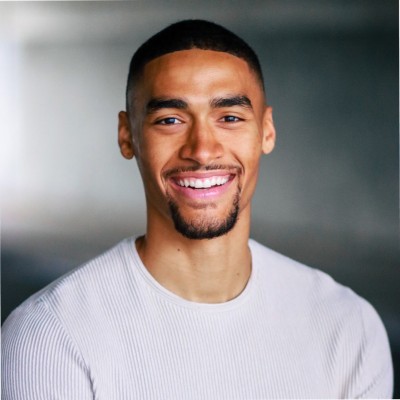
How High Performers Use Data to Optimize Their Health with Kyle Gonzalez of COYA


In this episode of Healthy Team Healthy Business, we sit down with Kyle Gonzalez from Coya to explore the intersection of health optimization, wearable technology, executive coaching and sustainable performance.
Kyle shares his personal journey from athlete and exercise science student into the world of health startups and explains why so many entrepreneurs, executives and high performers struggle with stress, burnout, sleep and recovery.
We discuss:
- wearable health technology
- HRV and recovery tracking
- sleep optimization
- burnout in leaders
- executive health coaching
- workplace wellness
- stress management
- sustainable habits
- hydration and nutrition
- mental performance coaching
- longevity and performance
Kyle also explains how Coya combines wearable data with real human coaching to help professionals build long-term healthy habits instead of relying on short-term fixes.
If you’re a business owner, entrepreneur, HR professional or someone interested in optimizing health and performance, this episode delivers practical takeaways you can apply immediately.
Key Takeaways
- Why sleep is a performance advantage
- The “3-2-1 Rule” for better sleep
- How wearable data helps behavior change
- Why stress is not always bad
- The connection between recovery and leadership
- Why self-care improves workplace performance
- How sustainable habits outperform extreme wellness trends
Resources & Links
🔗 Coya Website
🔗 Follow Koya on Instagram
🔗 Follow Koya on LinkedIn
INSTAGRAM
FACEBOOK
OUR WEBSITE
EMAIL: teamdudes@healthyteamhealthybusiness.net
Thanks for joining us for another episode of the Healthy Team, Healthy Business podcast. Uh, we're joined today by Kyle Gonzalez [...0.7s] who is, uh, part of a group called Koya that we're gonna learn more about [...0.4s] as we proceed, uh, today. And, um, we found out about Kyle through a mutual connection [...0.4s] and found out he, kind of, shares, you know, our vision of, you know, finding ways to, to help people, um, feel better, um, maximize their, their wellness journey [...0.5s] and, um, just overall life performance. So he's got a cool background to talk about, um, as an athlete. And we're excited to have him on the show today. So, um, Kyle, welcome.Thank you so much. Uh, so great to be here. Uh, happy Friday, and, yeah, excited for a great conversation, yeah, about ready to head into a long weekend with Memorial Day coming up. And, um, so hopefully everybody gets to enjoy that.The weather is not great here in Virginia where we're sitting, [...0.5s] but we'll still find a way to make sure that, uh, we remember those who, [...0.4s] who give us this holiday. Um, Kyle, could you go ahead and give us a little background on you?Before we were recording, we were talking about your background as an athlete and everything, but tell her listeners, you know, how you got to, kind of, sit where you are today. And, and, um, they won't, they won't proceed from there.Yeah, no, no, uh, definitely [...0.5s] it's been a winding journey, that's for sure. Um, but I think they all are, and for me that journey, kind of, [...0.5s] started around [...0.4s] around health. My mom worked in a hospital system for 20+ years, my father passed away of colon cancer at a young age.So I saw that at an early age and was always curious about health, was always curious about what we could do to take our health into our own hands to prevent [...0.6s] disease, [...0.7s] illness, dysfunction and all these different things.And so, [...0.4s] you know, middle school, high school, I became, like, the mini optimizer, trying everything, doing everything.I was taking, like, pre workout supplements, and I was in high school, I was, like, doing cold plunges and stuff before it was cool. Um, and, and, yeah, it, it peaked my interest so much that, like, I just wanted to become [...0.7s] the best person I could be, the healthiest person I could be.But I also [...0.5s] was an athlete. I played all sports, track, football, basketball, [...0.5s] and as an athlete, I was never the fastest, never the strongest, never, you know, the quickest, any of those things.And so you kind of had to find your edge where you could. And my edge was that I was, [...0.4s] uh, willing to work on different things that people want.Not a lot of people cared about sleep when you're in high school. Not a lot of people cared about, you know, these little French things that I did. And so, um, I loved it though, like I was, I was like all in. And, yeah, so I, I leverage that to play basketball in college. And I walked on, I had to work my way even to do that.And [...0.4s] with that, I majored in exercise science, which is probably the best decision that I ever made.And, [...0.6s] you know, people tell you to major in this and that, and you can make money here and do this, but I was like, why not just major in what I'm actually interested in? And that ended up being a great decision. Uh, just love my classes, never miss class.I actually tell the story all the time. I, since I walked on, I didn't have tutors or things like pick my classes to match the schedule of the team. So I actually had to go to practice some days, leave and go to class and then come back to practice, which coaches didn't require us to come back after you went to class.But I did. I wanted to and I wanted to prove myself, and so, uh yeah, that, that was happening throughout my time.And, [...0.4s] uh, anyway, fast forward, uh, I got my masters in kinesiology after that, continue down that train, [...0.6s] and, uh, [...0.5s] in the exercise science place, it's like, you can teach, you can, uh, be a trainer or coach, or you can work in a lab.And so for me, I try started with teaching. I taught a graduate level course, it was great, [...0.4s] uh, but I kind of, that wasn't my fit.And so I coached, and what I realized with coaching was, like, I had spent, you know, five, six years building up my education, getting all these certifications, and I had friends who maybe spent a weekend getting a certification and were doing the same job as me.And so I was like, man, I, kind of, wanna differentiate, build more skill sets and get out of this kind of just personal training coach role.And so, uh, from there, I had the opportunity to go work at a startup in San Francisco, in the health and amount of space, learn about the start of world, learn about different business skill sets, marketing operations recruiting, and really, like, build my repertoire.And so that helped me be a better science communicator, a better coach, [...0.6s] and just a better professional in general.And so [...0.4s] leverage that to work for a couple startups, and now landed at a wonderful place called Coya, where, uh yeah, we help people build a better habits. And, uh, it's, it's been incredible to, kind of, have that whole journey.And there's a lot of things in between and personal projects that I've taken on. But, uh, but, yeah, it's, it's just awesome to work in a space where you get to empower people to live better health your lives.And I can't think of a better job or better calling than that. And we always say I I don't, I don't have an occupation, I have a vocation, and so that's what I get to do each and every day.So that's, that's the quick story for, for me, [...0.6s] awesome always like to hear people that are actually doing something that they studied in and actually enjoy it.Rare to hear that, so it's good to, good to hear. Now could you maybe tell us a little bit about Koya, and how you ended by Koya, and what exactly separates Koya from maybe some of the competitors in the wellness space?Yeah, yeah, for sure, and so, uh, I had been working for a couple startups, and the crazy part was me and my wife when we were super successful by the external measures of success. Uh, but we had this, like, feeling that we wanted to continue to explore and experience the world and get out.And so we actually quit our jobs and traveled for five months, and so everybody told us that's, I don't know about that decision, um, but [...0.5s] quit our jobs, traveled for five months, it was incredible.We got to, kind of, come back to who we were aligned on our values, and so we got back into the working world.I was trying to consult while we were traveling, and all that actually ran into the founders of Korea, and it was like, this, like, I love it for sight moments where they were building something, or my skill set fit perfectly into what they were building and, and a piece that they needed. And so I [...0.4s] met them and straight off of traveling for five months.Wouldn't you have it? I, I had a beautiful job with a great company, mission driven company, uh, with great founders and great people. And so, uh, that's Korea, and Korea basically is a tech enabled executive health coaching, uh, company.And so we basically help people build better habits by [...0.5s] giving them a wearable, giving them a, a coaching team, and taking them through a 12 week curriculum to really help them understand their body, understand their data, [...0.7s] and understand their habits.And so through this 12 weeks, we try to give you, kind of that athlete celebrity experience, where you have a registered dietitian through [...0.4s] Korea, you have a certified mental performance coach through Korea, and then you have a certified fitness coach through Korea, plus a sleep coach as well.And so this whole team is integrated. They know who you are, they're coaching you, but they all know each other as well. And I think that's unique.I don't know if there's a place out there commercially that where you can get a whole team that can surround you, that's working with each other, that knows your, your biometric data, that knows you and relationally knows you, um, and kind of works with you through that. So [...0.4s] we give that experience.We, we work with first responders, we work with executives, entrepreneurs, um, and, yeah, it's, it's been awesome to come alongside people and really show them how to have a little bit more agency with their health and build habits.And again, we will use the wearable data as a tool to help people understand which habits to build, which habits, uh, can actually move the needle. Uh, because as we know, like, we're inundated with data.There's data everywhere, [...0.5s] but I think people a little bit kind of confused on how to use that data.It's like, we see the sentiment of, like, I have my whoop or my aura or my Apple Watch, but, like, I don't really know what to do with all the numbers and things and resting heart rate and HRV. We help you actually make sense of that, so you can use it as a tool to make more informed decisions. And so, uh, really, really gratifying work, really, really, uh, impactful work.And I think [...0.7s] the difference between us and other people is we're actually integrating all of these different aspects of health, rather than just we're a fitness company or we're nutrition company, or we're sleep company.We are a holistic health company [...1.1s] and do you, [...0.4s] but you guys aren't producer and werewolf, and you, you just work with whatever werewolf the individual has.Yeah, we are wear black gnostic, we want to meet people where they are, and I know people have affinities to different, so we work with Garmin, we work with whoop, and we work with Ora, um, mainly. And so, but we also take in different diagnostic testing, v 0.2 max CGM data, all of that stuff. We're like, the, the integrative platform that helps you use all of that stuff that you're getting.And so a lot of people are coming with blood tests or all these different things, and will help you [...0.6s] interpret and actually [...0.4s] take action based off that stuff. And so we, we're like, the, so what platform you have all this data, like, so what, what's the actual action you could take from that?Um, as opposed to just sitting on top of all this data and being a little bit kind of confused on where to go with it all.So what is it [...0.6s] when, when somebody signs up with you guys for the first time, walk us through their initial experience, what's their initial introduction and their [...1.7s] understanding, what you guys are going to help them with?Yeah, so, uh, when you sign up for Koya immediately you get a real human coach, which I think, uh, I say that with emphasis because this day and age, there's a lot of AI, there's a lot of kind of tech that kind of takes over with some of these things.But [...0.8s] we [...0.4s] truly fundamentally believe our first core values, human first, and we fundamentally believe that humans help humans change behavior. And I don't think right now we're at the stage at scale where technology or AI can drive long term sustainable behavior change.So first step when you sign up is you get paired with the human coach. That coach starts building the relationship with you, starts understanding your life, your goals, your why I think, which is really, really important and your values. And we then give you a wearable as well.So you get a wearable with the program. So whether that's Whoop Garment, Aura will ship that wearable to you. And so again, you're starting to collect data, you're starting to notice your data, you're building this relationship with your coach, and then you also are starting the education process.And so we basically go through what we call our eight controllables and these are the foundations of health and wellness. So things like self care, sleep, mindset, movement, nutrition, all of those things and we do those two at a time over the 12 weeks. Uh. And it's basically an hour commitment a week.And so we're working with busy professionals, parents, uh, executives, you know, first responders. You know, people always have two, three, four hours to commit. And so it's an hour a week. It's very straightforward. It's based on your schedule.It's flexible. And, and I think the key for us is meeting people where they are and helping them take the right next step. And that doesn't mean [...0.4s] overhaul on your life.That doesn't mean like 30 days, we're gonna solve all your problems. That means we're gonna help you build sustainable habits that are small, that if you stick with them, they will actually compound to big results over time.And you won't be in that like yo yo stage of like, alright, I'm really, really in it and then I burnt out and fell off. Okay, then I'm back, really really in it and then I burnt out and fell off.And so 12 weeks gives us the perfect amount of time to build true habits that actually sustain as opposed to like a, you know, 30 day New Year's challenge or, or whatever the case might be that you might kind of fall off of.Could you maybe talk just briefly about what some of those habits might be? I mean maybe going in too deep. I know you talked about four different aspects.So [...0.4s] maybe kind of just helping somebody why would they come in and, you know want to work with Koya? So what issues they might be facing? Yeah, uh the sleep is the biggest one that jumps out, uh, off the page.I think, [...0.5s] uh, Matthew Walker, he wrote a book while we sleep has kind of changed the narrative on sleep.And I think it's been incredible. It used to be, I'll sleep when I'm dead. Sleep is for the weak, weak. And it's, that's still pervasive in this day and age. And we kind of really help, especially founders and entrepreneurs, flip that on its head of like sleep is their superpower. And sleep is the thing that you really have to lean into.And so one of the biggest habits that people, people see from a data perspective and sometimes seeing the objective data helps flip the light switch on of like, oh wow, like I actually really do have control over like my habits and, and agency over this thing that is health.But one of the habits that really stands out is not eating too close to bed or not eating three hours before bed.So we have a habit called the 3, 2, 1, 3 hours before bed, not eating anything two hours before bed, no heavy mental work, like cognitively demanding work, and then one hour before bed, no blue light or screens.And so [...0.4s] that habit alone people see so much change from, and it [...0.5s] kind of turns that switch of, like, okay actually buy into coil, this stuff works. I see my sleep restorative sleep changing. I see my HRV changing.Um, and so that's a big one, I think, uh, from a nutrition standpoint or hydration to standpoint. Uh, getting half of your body weight and fluid ounces of water is another big one.Hydration is one of those things were like, nobody, [...0.4s] like, really thinks in depth about hydration unless you're like an endurance athlete or something like that.But [...0.8s] it's one of those things that underlies everything, energy, mood, brain fog, all these things could be you, because you're not hydrated.Every, we're, we're 50 to 70% water as humans, and so you would you would think we, uh, we need water, and so, uh, that habit was actually in 2025, the most selected habit in the coyote database out of hundreds of habits that we have.That one was the most selected, and I think it's because people saw such a benefit from being hydrated on their energy, being hydrated on how they show up.And so, yeah, there's, there's plenty, I think sleep, self care, uh, and nutrition are, are really the big ones that we, we highlight a lot. Um, and, [...0.6s] yeah, I'm a big fan of movement, but I could talk on movement for days, but I'll leave it at that for now.What do you see people [...0.6s] most not understanding about themselves? I hope I'm asking that right now, words, yeah, couple years ago, if you told me something about HRB, I would have looked at you like you had three heads. I don't know what that means.So I can picture someone who just like, I just wanna feel better. I wanna sign up with these guys and you start [...0.5s] talking about that stuff. What, what is surprising to you? Or what is the most, [...0.6s] um, like new thing that these people just have no idea that it's something that can even be measured.Yeah, I would say the first thing that popped into my head was, uh, just self care. In this concept of self care, I think, uh, when it comes to high performing people, [...0.6s] there is this kind of uh servant leadership model of like, I'm gonna put everybody else ahead of me, and I'm gonna put myself last.And that's like a noble thing for people. It's like my family comes first, my work comes first, my other, like friends come first, all of that stuff [...0.5s] and what you're left with is yourself that gets kind of the scraps. And usually that means your health starts to fall off a little bit.Usually that means, you know mentally, you start to fall off emotionally and all these different things. So for us, we [...0.4s] really put an emphasis on self care and challenging people. What would it look like if you put yourself first [...0.5s] and before your partner, before your kids, before your work?And that's an uncomfortable thing for people coming in, but guess what? You, we always say you can't pour from an empty cup, and so if you are not full yourself, what are you then giving to your partner, what are you then giving to your kids, etc, etc, your work.And so for us, that has been like a revolutionary flip for people. And when they actually do, do that, [...0.6s] uh, and one of our members put it best, it's like Korea gave me the permission to put myself first and now like, it's okay that I, I I sleep a little bit more. It's okay that I, you know schedule these things for myself, for self care.And so that is like a revolutionary concept for a lot of people who are [...0.4s] really professionally driven, high performing people and a little bit kind of unaware of how that's affecting their health, not just physically but mentally emotionally, [...0.4s] running into burnout, running into all these things. So that's a big one. And then you just mentioned it like the data piece.Some people are like data nerds all over it and like really into it. Other people, it's like they have no idea about any of this stuff, which it's helpful to understand the raw data because I think when you see some of these wearable devices, it's like you get a score and people associate scores with good or bad.And so [...0.6s] HRV is one of those metrics where we try to get people out of the good or bad. It's just information and it's just how your body is adapting to stress or strain.Stress, that's another thing people think stress is all stress is bad all stress is bad it's like no stress is necessary for growth.And so I think these are some of the themes that come up and we help people understand the raw data, how to look at resting heart rate, how to look at HIV, how to look at restorative sleep so that you can then make more informed decisions as opposed to being kind of slave to your score that day.Because research shows, and it's pretty definitive that [...1.0s] if [...0.4s] you see a bad score, and think that that's bad, [...0.5s] that's gonna become a self fulfilling prophecy, and your day is going to be worse.If you are looking at that score, if you see a positive score, and you're like, oh wow, like, I should feel good today, cause I got a positive score, you're gonna feel better, and so that's a dangerous game to play, because these metrics are all gonna fluctuate up and down, and you never wanna be tied to the data that, that neurotically. So those are a couple things that come to mind.When it comes to the light bulbs that go off with people. How does it usually works? You said it's a 12 week program. Um, you're tracking that with the device of your choice on the garment or, [...0.6s] um, [...0.6s] how does it then work with you guys on dissecting that information?Is it then like a weekly or [...1.2s] the HRV like you [...0.8s] explained? You know someone's getting nine constantly and then that just keeps bringing them down even more versus they got that. Now you guys help break it down at the end of the first day, the week. How does it how's that work usually?Yeah, that's a that's a great question and it is something we take seriously because [...0.7s] we wanna make sure we put people in the right frame of mind going through the co work.And so and the curriculum, there's a heavy emphasis in the beginning on kind of just understanding these things, but also like applying them.And so not just teaching you about what HIV means, like that's great and we do that, [...0.5s] but we then have coaching sessions on the background. We call them like data review sessions where your coach will talk about your data with you.And we call it like storytelling your data. Like it's one thing to just look at data on a page and any great, uh, you know exercise scientist or just, you know somebody who's into wearable data can probably look at data on a page and be like, okay, this is what I think is probably happening, but guess what?You put story behind that and you actually ask a person like, hey, what was going on in your life on this day when this happened? And it's like, oh yeah, like maybe my sleep was bad because my kid got up in the middle of the night or actually I had a happy hour that I went to.That adds so much context in color and it helps people start to connect when I did X, [...0.6s] this happened in the data on why. And so I think we start to help people connect those dots and then it becomes a lot easier to notice when, you know uh you know different things in your routine.Like then we can add two or three habits or one or two habits and say, okay, if you keep everything consistent, add these one or two things, here's what then happens to the data over time.And so like sleep consistency is a big one. When people actually can go to bed and wake up at a similar time within 15 to 30 minutes each day, even the weekends, [...0.6s] people will start to see HRV level out, the restorative sleep, people start to look better and all that stuff.But again, if they were just to try and [...1.2s] try and implement the sleep consistency habit for two or three days, they probably like, ah, this isn't working. Kindly, I don't know what's going on.So it's like the data helps back some of these habits that we're starting to do to show them, hey, this is happening, your physiology is changing. And guess what? Sometimes it's like you try a habit and it doesn't work and that's okay. Guess what? Like, we, we didn't experiment. It didn't work.Let's move on to something that might be a little bit more positive. And so we have 12 weeks to kind of run these many experiments. We actually call it at Koya the pad Model P a t a. So plan, act, track, analyze and we help people work through that cycle.And this is where coaching becomes priceless because that coach can bring context, can bring their requisite knowledge from the past people that they've worked with and say, [...0.4s] oh, hey, like we had a previous person that I've worked with that seen these types of patterns. So you can expect this when you're looking at yours.So, um, it's coaching, it's curriculum, and then it's a lot of helping to set people up so that they can be more aware, they can notice their own data and start to, uh, you know really learn and grow themselves with it.We like to say, like, we, we wanna build a culture of education, not a culture of compliance. Like, there's sometimes where we can tell you here's the right directions to go, but we wanna be the co pilot, the sous chef, not the person that's like, do this, do that.Because then okay, the 12 weeks is over or you stop engaging with Koya, then what, what happens when you have to navigate your environment on your own? So [...1.1s] that makes me think of another kind of question, um, with respect to the coaching.Let's say you get somebody in there and [...0.5s] after their first or second session, you realize their biggest issue is [...1.0s] nutrition. Let's say, so can you shift focus for the next like two or three weeks and say, hey, [...0.7s] uh, participant X, we've, we've kind of recognized that this is the big issue for you.We think this is where we need to spend a little bit of time and then switch back to other stuff because you're coaching that dynamic [...0.9s] 100%.That's, uh, it's an excellent question because, [...0.6s] uh, in the beginning, we want to help people identify goals, help people identify where the area of biggest need is.Our curriculum is designed to help people almost [...0.6s] get a taste of each of these big areas, build a foundation with each of these big areas. And also it's like a choose your own adventure experience. And so you have access to this whole team.If [...0.6s] nutrition is a burning desire need for you and you know that right away, we can totally expedite that process and be like, hey, the coach that's kind of co piloting that journey can say, hey, let's get you with your RD sooner, let's get you set up so you can actually do that.We offer micronutrient and blood testing through the RD, personalized supplementation and all these different tools.But we're a foundation's first lifestyle behavior change first company. And that's how we're set up, is like, we're the behaviors that we can do first.But totally [...0.6s] this is why it's awesome to have the experts on our team because we can directly refer [...0.4s] to those people as opposed to having to like refer out or, you know go to someone that's outside of our ecosystem. And guess what? That RD is working with your coach, so they're talking to each other.Your coach can give the context to that RD to say, hey, Participant X has two kids.They work as a first responder, which means they work some night shifts. And that helps them come into that conversation with so much more context. But, yeah, totally you can expedite that process and flex wherever you want.Okay, [...0.8s] what do you see after that 12 weeks? I mean like you talked about, you know building those good habits, but what normally is the, the kind of lift up half after that?Yeah. So we recently introduced memberships because I think people always wants [...0.5s] to have some level of support, guidance, engagement depending on where they are in their journey.Sometimes it's a monthly check in, sometimes it's a quarterly check in, sometimes it's a, hey, I still need like the actual hard coaching to continue the journey.So we have varying levels of memberships, uh, basically with like weekly touch points, monthly touch points, or just kind of engaging with our app. And so I haven't talked much about the app, but we have an app experience where it's all kind of connected.And so this is where people communicate with their coach. We have a very simplified raw data view of your data that helps you kind of conceptualize all that as opposed to like like I mentioned, the scores and everything kind of being inundated and thrown in your face.And then we have habit tracking within the app, which is also [...0.6s] an awesome feature where again, let's say you want to do the habit of not eating three hours before bed.We, you can turn on that habit in our app, and it'll give you a nudge, let's say you can set it for four hours before bed of like, hey, Kyle, it's four hours before bed.Like, now it's time to start winding it down from the food, which helps you nudge and kind of give you that push towards those habits.And so with that, people can still engage with the habit tracking with the app, people can engage with coaching, or people can kind of still get the immersive full coach experience [...0.5s] that helps. When it comes to, once you finish, you can kind of drop into any of those.It's like I said it, forget it, monthly touch points, weekly touch points, whatever area you feel [...0.4s] most need.But I think most people, [...0.5s] they feel, uh, a lot more, again, and they were, that keeps coming up from his agency and they feel a lot more equipped to help their different environments, home environment, work environment, travel environments.And that I think is the biggest thing that we can pass to people is like, you feel like comfortable to make better decisions. It's not gonna be perfect.We all know that we actually I don't know if anybody wants to live in a world where everything's perfect and optimized because that that's not life.And so we just want me, people to make more informed decisions. And sometimes I always say in health and wellness, there's no solutions. There's only trade offs.So we're just making, you know the best trade offs given situation. Some days, if you want to, uh, you know drink alcohol with friends on a guy's trip or, you know whatever, that might actually be a bigger stress relief and a bigger social boost than the alcohol is a damage. So, it's like, we would never say this is bad good.It's just a trade off and figuring out which trade offs you want to make. And so after the co words, we, kind of have a coaching session with people to understand.Hey, this is what you wanted to do when you set out with the cover. Here are the goals you set. Do you feel like [...0.8s] what type of support do you need beyond this? And we, kind of go from there.The euros database, I'm assuming you've [...0.5s] got [...0.4s] enough now to start what kind [...0.5s] of really looking at it as [...0.6s] a [...0.4s] 10,000 foot level. What, what are some major trends you could share with us that you see out there? And I don't know if it's broken down by, by gender or, um, age gap or whatever.But what are the big, big trends you're seeing in your own and database that you see is the biggest problems coming in and in the greatest successes during that 12 week initial period.Yeah, it's, it's a great question. I would say [...0.8s] people coming in in, kind of the business parent executive entrepreneur space are generally, like, underslept.They're not they're not sleeping enough. And [...0.5s] I, I think what we [...0.5s] try and focus on throughout the cold ward is not necessary cause it can be daunting if someone sleeping 5 hours to say, hey, you need 7 and 9 hours. It's like where you gonna find two extra hours for someone who's really, really busy and wants to work hard.So for us, we could take a two prong approach of like, okay let's think about not just quality or sorry, quantity, but also quality. And so I think, [...0.4s] uh, we see a lot of that coming through with people and we can help them boost their restorative sleep.So with the time you are asleep, can you actually get more restorative efficient, effective sleep and deep sleep and REM sleep, which I think is super, super important. Um, and so that's, that's one area.The other areas kind of around, like stress, I guess I would put that in the stress category of a lot of people are coming in [...1.0s] very, very what we would call like sympathetically driven.They're in go mode, they are hyper, uh, kind of like on all the time, that feeling of like you're always on, you're always answering work emails, text this that, and there is less time, kind of the parasympathetic rest, digest, slow down, pause moments in life.And so we really try to emphasize like, look, you know, how to press the gas and you've done that well your whole career. Now let's train the brakes.And, and I and so with that, it's a lot of reflective practices, mindfulness stuff, proactive mindfulness, not just when you're stressed. I'm gonna do breathwork or meditation or something.It's like build these practices into your day and then just pause and reflection moments throughout the day so that when your head hits the pillow, it's not like your mind's racing on all the things you did today and what you're gonna do tomorrow.It's like I can process, I can sit down, maybe it's journaling, maybe it's breath work and all these things. So [...0.8s] people being underslept, people being highly stressed.And then I said, the third is [...0.4s] nutrition. I think this is a big one for people. Uh, we always get, it's funny when we pass people to the RDS and they're like, oh yeah, I eat fairly good. I'm like, okay wait, what does fairly good mean?Let's explain that. They're like, well, like, you know and they start to unpack it. And so I think there's a lot of oh man, there's a ton of noise in the nutrition world.Oh yeah. Well, I think for people [...0.6s] really unpacking what their nutrition looks like, making a few small changes, maybe it's hydration, maybe it's more protein, maybe it's just like understanding where they are and doing a little audit of their nutrition. Those things are super important, uh, to really get people [...0.5s] aligned with where they are in reality.Because sometimes people think they're eating great and it's like [...0.4s] maybe that's not great for them. And so, uh, I think that's another big one where a lot of people the best thing that get out of the program is that nutrition help.Because [...0.6s] nutrition is one of those things were like most of the time, most people are eating probably the same [...0.5s] seven to nine meals each week. And so if you can kind of adjust those meals, adjust your snacking, adjust hydration, protein intake, it's like usually it kind of runs like a well oil machine. Um, and it doesn't take too much, but yet we're sold, [...0.4s] you gotta overhaul everything, you gotta only eat this, you can't eat this category, you can't eat this food. And I think that, that restrictive approach [...1.1s] typically doesn't [...0.4s] sustain, and so we see people that yo yo diet, and so, uh, those three areas really are what jump out of the page. We have tons and tons of data because, uh, people can opt into doing micronutrient testing as well. And so [...0.6s] we see the vitamin DS of the world, the proteins that are low, we see magnesium is low, we see B vitamins are low, we see and you can just see these things time and time again.And it's guess what, these things are prevalent, and, you know fruits and vegetables and the things that, you know people probably should be getting more of.So, um, we do have a, a large data set, and it's, it's helpful to understand where trends and patterns are because sometimes we can kind of hit the nail on the head sooner or quicker with the coaching and with everything because we have that requisite knowledge.Okay, good, thank you. Well, maybe with some of that information too in those kind of those three and maybe sleep being the key, [...0.5s] um, in the intent of a business owner, HR professional trying to lead a healthier team.I know a lot of things that Josh and I hear is there's so much, there's where do I start? What do I do? Do you have any recommendations on something that [...0.6s] HR professional, business owner could do today to better [...0.8s] aid in the health of the team that they lead?Yeah, uh it's a good question, [...0.4s] and I think it's, it's a very nuanced answer, but I think for us, [...0.6s] we, we love Korea as a solution when it comes to organizations and, and teams because it is so flexible.And so sometimes what you'll see with companies, it's like alright, everybody gets a voucher for a gym membership or everybody gets a oral ring, which that's, that's great, that's awesome.Some companies are doing nothing, like, that's incredible, [...0.4s] but that is not gonna reach everybody the same way. And some people are more motivated, some people are tech driven, some people are not tech driven. And so for us, [...0.6s] the best thing we can do is meet people where they are.And so when we come into businesses and companies, executive teams, we do take a personalized approach which is hard to do at scale. But we pride ourselves in bringing real humans into the equation to help people understand.Okay, I wanna hear you and see you as a person as opposed to [...0.7s] let's just check the box of we did something for our employees.And, and so I think when we can come into companies and do educational sessions, and we can pull people and we can ask questions, we can do breakout rooms, we can get interactive, we can then come up with a solution that is actually [...0.5s] more suited to what that company needs.We've done this, we've worked with construction companies, we've worked with JP Morgan, we've worked with Morgan Stanley, and we go like office by office [...0.4s] and the solutions might look different based on who were working with and why.So [...0.5s] it's hard to blanketly say, like, okay every HR professional people should be doing these things. And there's, of course we can come in with 10 habits that everybody can do. That'll probably move the needle.But I think that's why we love, of course, so much as, like, we can come in, take a more personalized approach and actually like, see the people that [...0.5s] are, you know in these companies as people as opposed to just, you know a number or an employee that has to get this benefit and check that box.And so that's been really like the work we do at first [...0.6s] founders, the work we do, uh, we, we worked with a company a construction company and construction companies, they're not typically doing the most for their people.And so to come into that company and to see [...0.4s] the impact that we had, and to see the buy in that they had from the executive team level to do this for other people and pay for it [...0.8s] again.And if you're looking at it from a business perspective, the ROI is incredible, because, it's like, you're reducing disease risk, you're, you're [...0.6s] having people get sick less, you're having people function better on the job, so you're more efficient and effective, your people are happier because they're healthier, and so insurance premiums go down.Like, you could just go down the list of all the things that you're saving money on, so we can make that case, but also the people themselves will make that case that they just feel better.And if their company is doing that something that personalized for them, you bet they're gonna show up more and want to work for you more and want to do more for you overall.So, [...0.7s] yeah, hopefully that doesn't, like, dance around the question what kind of answers that, [...0.5s] yeah, no, this, [...0.4s] yeah, that's exactly the mission we have.And when we talk to other small business owners, [...0.6s] why are you guys spend so much time on these bonus programs in your business? And that, that the answer you just gave is probably better than what we do.It's exactly what we say to them, and you can't always measure it. Mean unfortunately, you can't, you know if you wonder if you're a bean counter and, like, okay how much do I get out of this?I don't have any idea, [...0.6s] but it pay trust me, it pays you back, [...0.5s] yeah, yeah it, it it it pays back in dividends and, like, the, yeah, the best investment you can make is in your health and in your people and all those things.And I think like you said, sometimes it can be hard [...0.7s] for people who maybe [...0.6s] are living, you know in the past or people who are can't kind of see those things. It's like it can be hard to help people understand that when people are healthier, they are more effective.But I would say, [...0.4s] um, we're actually seeing the shift in the industry from the entrepreneurs, executives and people that we work with in the business setting [...0.4s] of, like, I guess you can call, like, the corporate athlete.People are wanting to put a lot more time, energy, and dollars into how they take care of their health and also mentally. I think, uh, that's another area we haven't talked about a ton here, but we have certified mental performance coaches on our staff.And something that I've come around to a lot just by working with our team is like we have trainers for our fitness, we have nutritionist for nutrition, we have sleep coaches and all these things. But like, what about our minds?Like not many people have coaches for their minds or think about coaches for their minds. And that's, I would say, our most powerful tool.And so for us, it's helping people [...0.6s] form the right mindset. Uh, you know we've, we've heard probably growth mindset and Carol Dwex work, but I think just understanding self limiting beliefs, understanding how you view certain topics.Some people come into us and they're like, oh, Kyle, like no, I'm just a bad sleeper.I'm like what does that what does that really mean? Like you're a bad sleeper and it's like, no, I've never been able to get over six hours of sleep. And I'm like, we start to deconstruct that and show people that, no, you've just kind of had different seasons of life and different variables that have made it seem like this is the case.But actually if you prioritize this thing and have a better routine and adjust your environment a little bit, and then again people are like, wow, I never thought I could sleep seven hours. I never thought I could do this. Um. And so sometimes it was their mind that was holding them back the whole time.And if you can unlock that [...0.6s] change becomes a lot easier in so many different categories because then they start to notice, [...0.4s] oh, maybe I'm actually holding myself back here as well.And so that's another great tool, was just like, man, getting people to get out of their own way is such a powerful, powerful thing. [...1.2s] Yeah, that paradigm shift that mental health is, is definitely key there.Yeah. What about, um, I guess kind of wrap it up here and respect your time. Um, just curious where people can find more about Koya. What's the best, [...0.5s] you know source for resource for people to go to businesses or individuals and then, um, you know where to find that on.If there's, you know social media or anything else, you could share that with us. Yep, yep, for sure. So the website is Koya Dot Life and the name Koya, I guess I should explain that the name Koya comes from the Nekoya Peninsula, which is a blue zone in Costa Rica.And so a lot of our methodology is based off of performance and longevity. And we're kind of one of the first organizations to really combine those two things. And so we've worked with [...0.4s] high level athletes, first responders and, and people in that space.And you look at LeBron James, Tom Brady, Serena Williams and what they have in common is not necessarily, yes, they dominate on the floor, but they also dominate off the floor. They take care of their bodies. They invest a lot in their bodies.And guess what? That showed up in their longevity. LeBron James is like one of the biggest advocates for sleep, and he takes lots of naps and sleeps a ton.Tom Brady is doing all these things, red light therapy taking care of us. So again, I think we take principles from that. We also take principles from the longevity world of Blue Zones where people are living past 100 at the highest percentages. And guess what? The habits that they have are foundational. It's eating Whole Foods. It's staying connected to your purpose. It's being around people, it's getting outside.It's moving daily. And so we kinda combine these two and we like, you know, we say performance for life. Like we wanna make sure that we're performing today, tomorrow, and for life.And so, uh, so that's where the name Coya comes from. But, yeah, you can, you can find us at Coya Dot Life, c o y a dot l I f e, and then on socials is the same thing Coya Life or Coya Dot Life, uh, on LinkedIn, we're doing a lot of great work, on Instagram we're doing a lot of great work um and, yeah, we're, [...0.4s] we are a human first company, and so anybody that wants to engage with Koya, you can go to our website, and it's actually just like booking a coaching call, and so you just get, like, a free coaching call, or we can really say, is this right for you?Where are you in this journey, and how can we help guide you? And that's completely free and something that again, we wanna make sure the people coming in, uh, it's right for them, and it might not be right for everybody, but I think it's, uh, I, I would venture to say [...0.4s] everybody needs some level of coaching, even coaches need coaches.Um, and it's awesome when you can actually spend the time and energy and resources on yourself to get the most out of yourself and, kind of, uh really reach your, your potential professionally, personally, and in whatever, uh, stage you want to.So [...0.7s] really great, yeah, thanks for sharing all that, really appreciate it. Of course, yeah, well, thanks for your time today. Uh, I think David and I [...0.4s] definitely enjoyed this, and we really love the mission, what you guys doing in your approach to, I think that unique approach is what's really intriguing. So I think our audience is gonna get a lot out of it.No, I, I echo it right back. I thank you both for having me on, and [...0.6s] as you can tell, I get enthusiastic and passionate about this space, because, [...0.4s] yeah, we truly love what we're doing.And I think our goal is to just empower people to have more energy to pour into the things that matter to them. And so if we can do that for people, that's accomplishing the goal.And so we'll keep fighting the good fight, but I appreciate you all giving us the platform to, to talk about it and share the message with other people.You bet we'll share all that information out [...0.4s] in the show notes once we get this thing posted. So our audience will be able to [...0.5s] find a way right to you, so take care of that awesome. [...1.3s]Thanks for joining us for another show of the Healthy Team Healthy Business podcast as always, you can also find us [...0.8s] our socials are [...0.5s] Instagram and healthy team Healthy biz. That's B I Z [...0.9s] and [...0.8s] our other locations.And then if you have questions for our show or suggestions, ideas for guests, [...0.4s] team dudes at Healthy Team healthy business dot net.We'd be happy to have [...0.4s] your feedback. As always, [...0.8s] find us one of your favorite podcast platform if you could leave us a review or share with someone in your network. That would just help us keep growing our show. Thanks a lot and take care. [...0.3s][...0.3s]